> For the complete documentation index, see [llms.txt](https://docs.alfred.trade/alfred-documentation/llms.txt). Markdown versions of documentation pages are available by appending `.md` to page URLs; this page is available as [Markdown](https://docs.alfred.trade/alfred-documentation/using-alfredo-trade/trigger-order.md).
# 🔻 Trigger Order
## Sell Trigger Order
A trigger order enables the user to automatically execute a sale of their position when a specified condition is met.
A Limit Order and a Trigger Order are different. A Limit Order sells at the exact price you set, but a Trigger Order might not because of slippage. So, when you sell with a Trigger Order, the final selling price could be different from the one you chose.
Slippage Tolerance is set at 25% for the Take Profit orders and 50% for Stop Loss orders.
The current open orders limitation is 5. So the user can not create more than 5 orders overall.
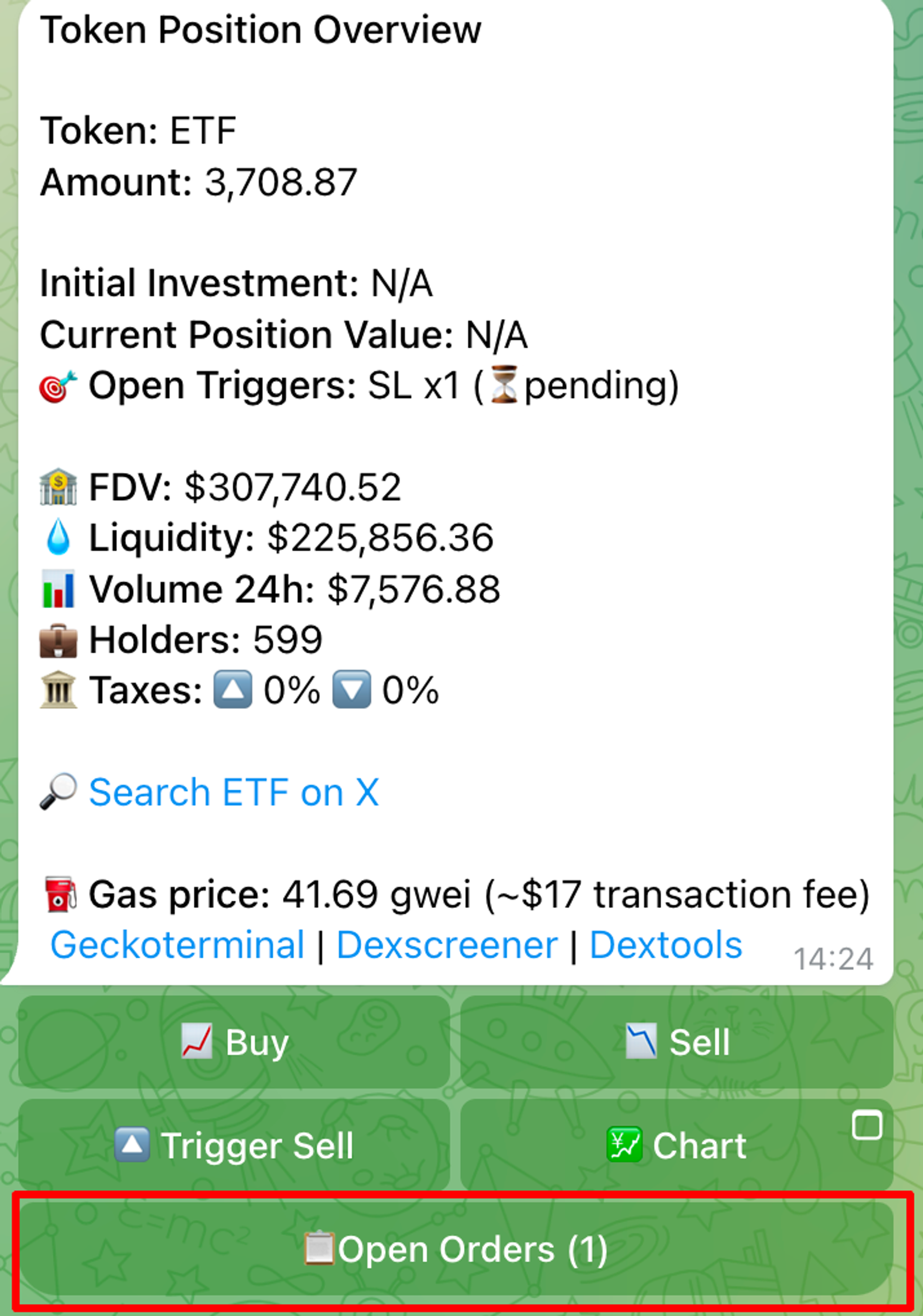
Position Scene
### Order types
There are two types of Sell orders:
* Stop Loss (SL). Sl order is a “command” to sell a token when its Price or FDV drops to a set level, reducing potential losses.
* Take Profit (TP). TP order is a “command” to sell a token when its Price or FDV rises to a predetermined condition, aiming to secure profits.
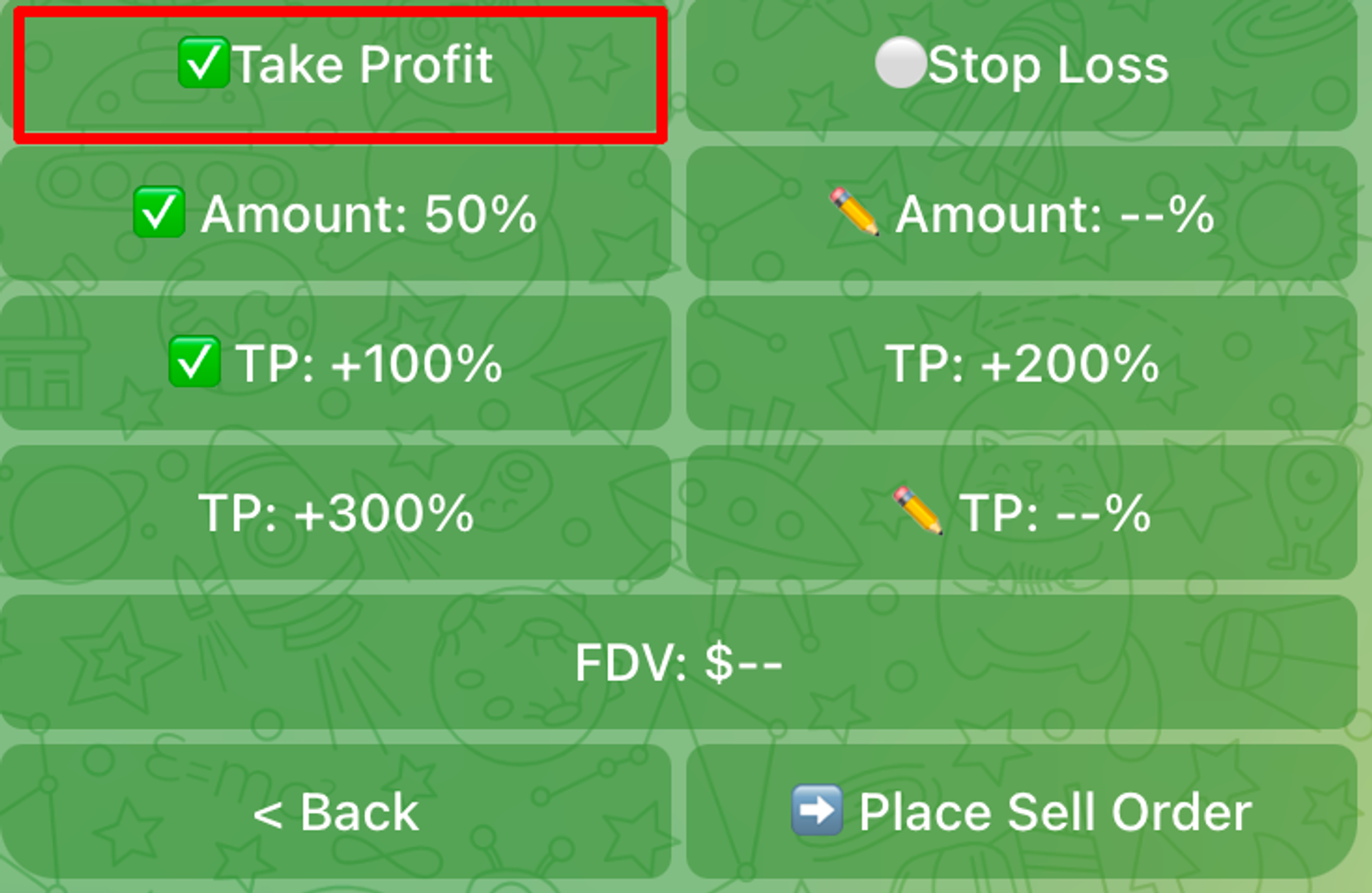
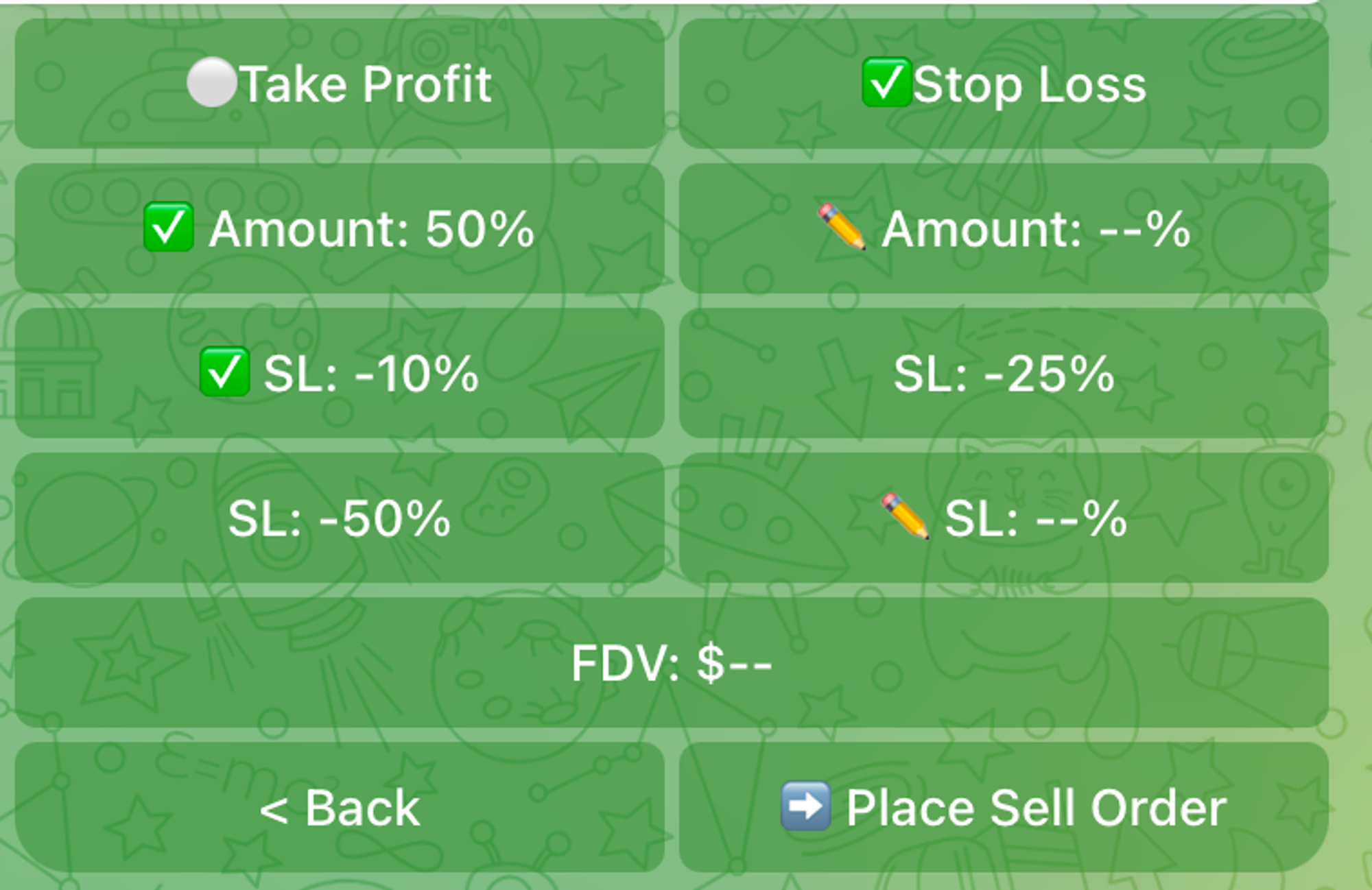
Users may choose the type of order by clicking on the “Take Profit” or “Stop Loss” buttons.
### Take Profit order
Take Profit Order configuration
There are 2 possible configurations in the Take Profit order:
* Amount. 50% or Custom %. If the user clicks on the "Amount: —%" button, they will need to enter a percentage value manually. For example, entering "44" means 44%. The available options range from 0 to 100.
* Sell Trigger. Users can pick one of two triggers: either the token's growth percentage compared to its current price, or its Fully Diluted Valuation (FDV).
* Take Profit: 100% (x2), 200% (x3), 300% (x4) or Custom Input. If the user clicks on the "TP: —%" button, they will need to enter a percentage value manually. For example, entering "501" means 501%. There is no limitation for % value.
* FDV: Custom input of the Sell Trigger FDV. The possible values are from 0 to 10,000,000,000,000.
*In custom fields, only numbers should be entered; including symbols such as % or others will result in an error.*
### Stop Loss order
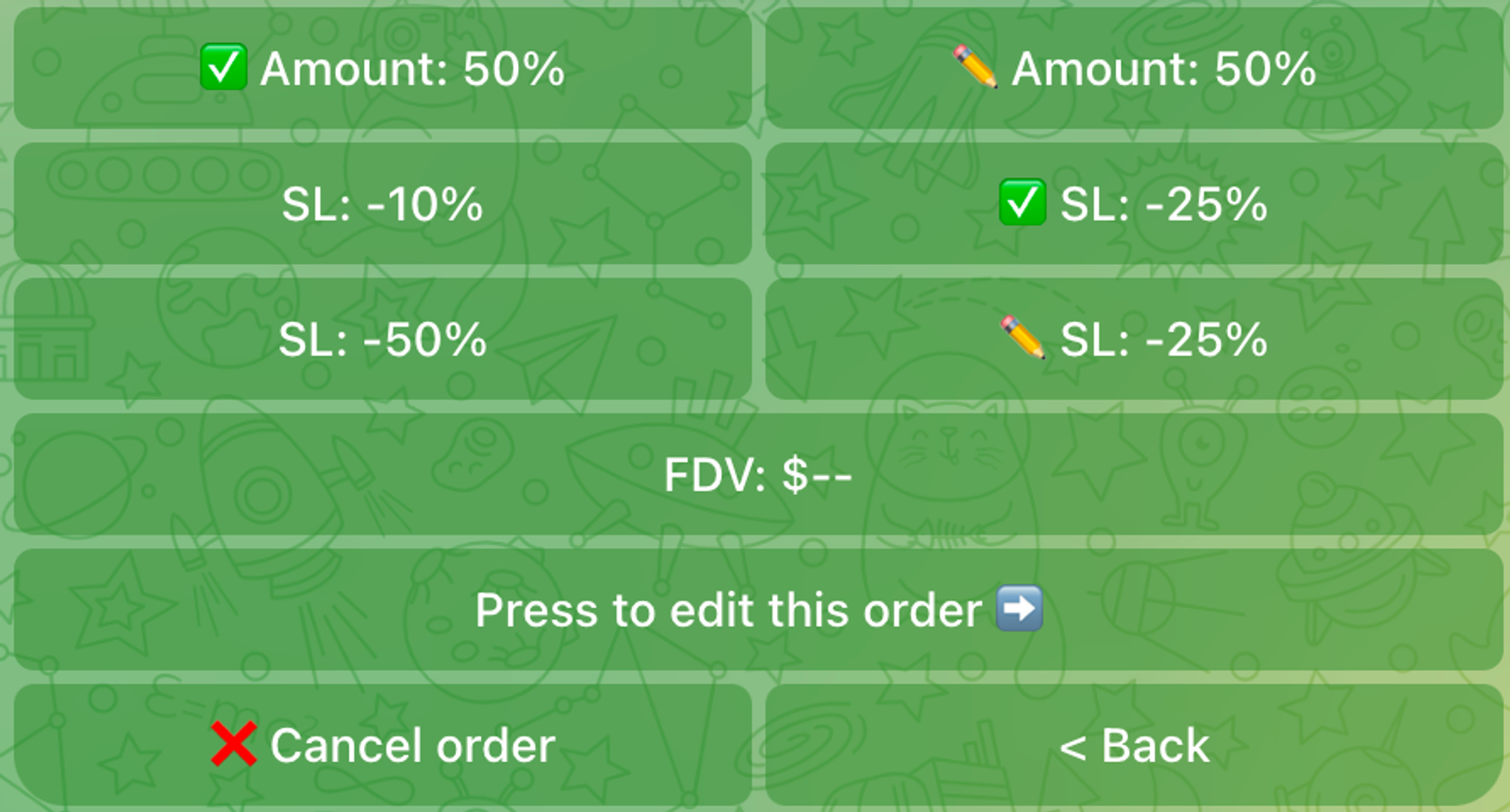
Stop Loss Order configuration
There are 2 possible configurations in the Stop Loss order:
* Amount. 50% or Custom %. If the user clicks on the "Amount: —%" button, they will need to enter a percentage value manually. For example, entering "44" means 44%. The available options range from 0 to 100.
* Sell Trigger. Users can pick one of two triggers: either the token's growth percentage compared to its current price, or its Fully Diluted Valuation (FDV).
* Stop Loss: -10%, -25%, -50%, or Custom Input. If the user clicks on the "SL: —%" button, they will need to enter a percentage value manually. For example, entering "20" means -20%. The available options range from 0 to 100.
* FDV: Custom input of the Sell Trigger FDV. The possible values are from 0 to 10,000,000,000,000.
### Edit Existing Order
The user may see the list of created Trigger Orders under every position.
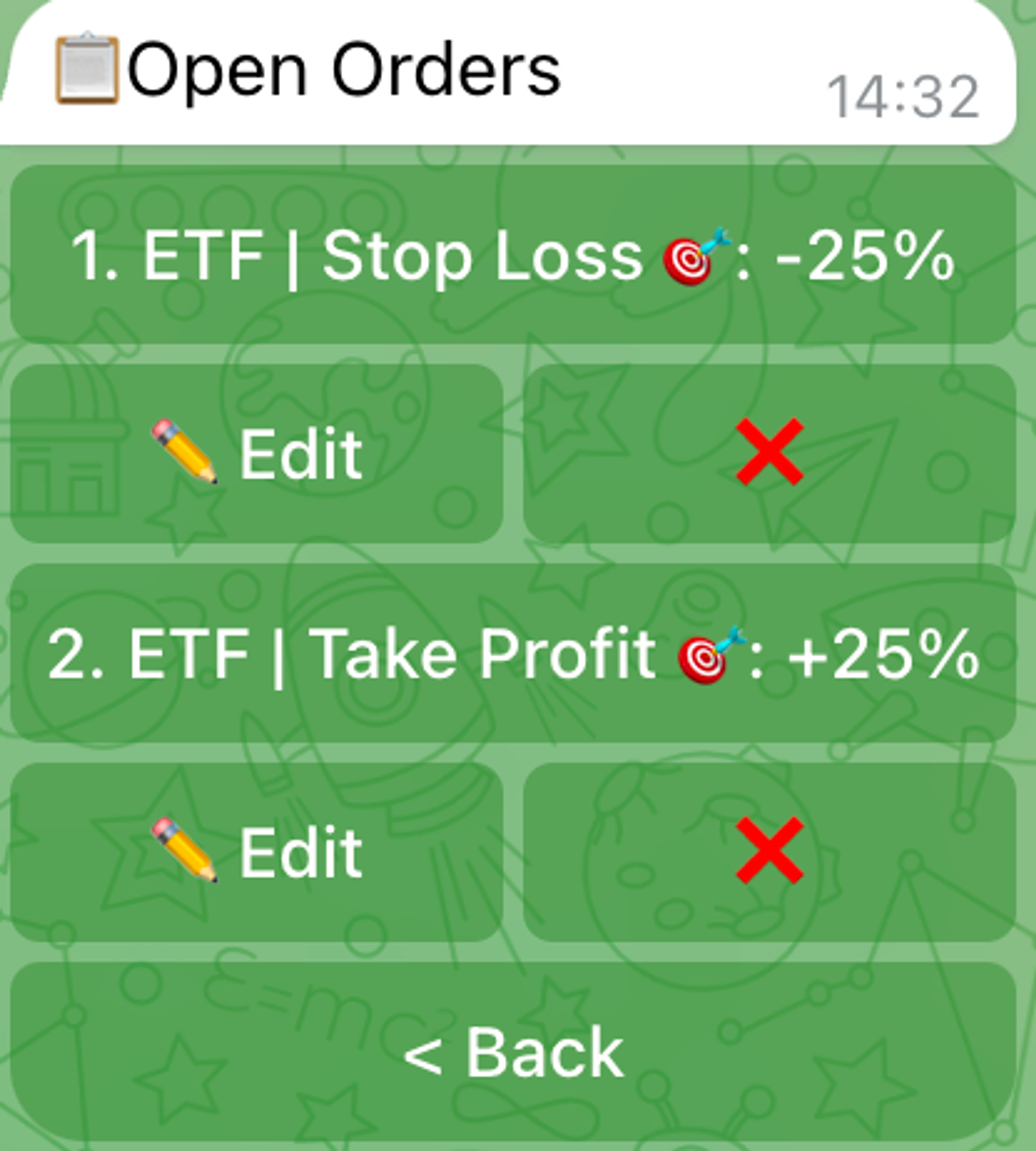
If the user clicks on the Open Orders button the following menu appears:
Orders management scene
Possible options are:
* Edit Order. All parameters, except for the order type (Take Profit or Stop Loss), are editable.
* Cancel Order. The order will be immediately canceled after confirmation.
Order Edit scene
If the user chooses to continue with the edited order the previous order will be automatically replaced by a new one.